

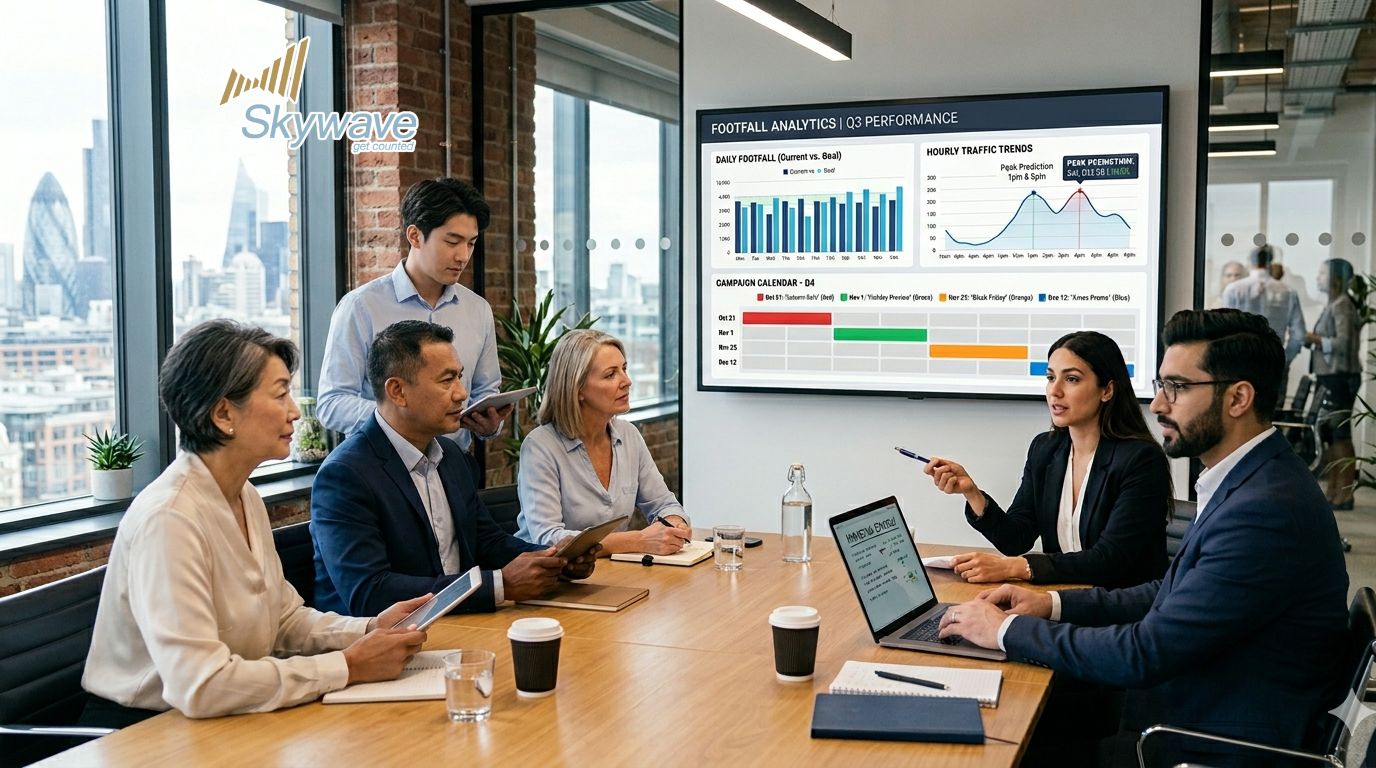
Marketing has always been part art, part science. But today, the science side is accelerating fast. For retailers, malls, attractions, and event organizers, one question sits at the heart of every campaign:
“Will people actually be there?”
Footfall forecasting answers that question using real-time and historical visitor data. Instead of guessing campaign timing or relying on last year’s trends, marketing teams can plan, predict, measure, and optimize campaigns with confidence.
This article explores how footfall forecasting transforms marketing from reactive to data-driven—and why it’s becoming essential for modern retail and physical spaces.
Why Marketing Needs Footfall Forecasting
Digital marketers have long relied on analytics to optimize campaigns. They can track impressions, clicks, conversions, and attribution.
Physical spaces? Historically, they relied on intuition:
- Holiday seasons
- Payday weekends
- School holidays
- “Gut feel” about busy periods
But consumer behavior has changed dramatically. Hybrid shopping, weather shifts, tourism trends, and local events make traffic patterns less predictable than ever.
Footfall forecasting closes the offline analytics gap by helping marketing teams answer:
- When will traffic spike?
- When will it drop?
- Which campaigns actually drive visits?
- How should campaigns adapt in real time?
From Guesswork to Data: Linking Footfall to Campaign Timing
Marketing success depends heavily on timing. Even the best promotion can fail if it launches during a quiet week.
Footfall forecasting connects visitor data + campaign planning so marketing teams can align promotions with real demand.
Instead of asking:
“When should we run this campaign?”
Teams can ask:
“When will customers already be most receptive — and how can we amplify that?”
This shift is powerful because it allows marketing to work with natural traffic patterns instead of fighting against them.
The Footfall Forecasting Framework
Planning → Predicting → Measuring → Acting
Think of footfall forecasting as a continuous marketing loop.
1) Planning: Understanding Traffic Patterns
The first step is building a baseline using historical and real-time data:
- Daily and hourly traffic patterns
- Weekday vs weekend behavior
- Seasonal fluctuations
- Holiday and event impact
This stage helps marketers identify traffic DNA:
- Which days consistently perform best
- Which hours’ drive peak engagement
- When traffic dips occur
This insight becomes the foundation for smarter campaign planning.
2) Predicting: Forecasting Visitor Peaks
Once patterns are established, forecasting models predict future traffic based on trends and external variables.
Key forecasting insights include:
Predicting Peak Traffic
Marketing teams can anticipate:
- Festive season surges
- Payday weekend spikes
- School holiday crowds
- Tourism waves
- Event-driven traffic increases
Instead of reacting to crowds, teams can prepare for them weeks in advance.
This allows:
- Launching promotions before peak days
- Scaling advertising spends at the right time
- Ensuring stores and staff are ready
3) Campaign Timing: Launch Promotions When Traffic Is Rising
One of the most powerful use cases is aligning campaign launches with predicted traffic growth.
For example:
Without forecasting
- Campaign runs mid-week during low traffic
- Results look weak
- Budget appears wasted
With forecasting
- Campaign launches right before a traffic spike
- Promotion amplifies natural demand
- Results improve dramatically
Footfall forecasting helps answer:
- When to launch a sale
- When to push paid ads
- When to activate mall-wide events
- When to run in-store promotions
Timing becomes strategic instead of accidental.
4) Measuring: Connecting Campaigns to Real Visits
Footfall forecasting doesn’t stop at prediction. The next step is measuring impact.
Marketing teams can evaluate:
- Did the campaign increase visits?
- How did traffic compare to forecasts?
- Which campaigns drove the biggest uplift?
This turns physical marketing into a measurable performance channel.
Suddenly, teams can move beyond: “We think the campaign worked.”
To: “The campaign increased traffic by 18% versus forecast.”
This is a major shift in accountability and ROI tracking.
5) Live Adjustments: Real-Time Campaign Optimization
The real magic happens when marketing becomes adaptive.
Real-time footfall data enables:
- Extending campaigns during strong traffic
- Boosting ads when visits spike
- Pausing campaigns during quiet periods
- Adjusting messaging based on crowd patterns
Imagine:
- A mall sees unexpected afternoon traffic surge → push social ads immediately
- Rain reduces visits → shift budget to the weekend
- Event crowds exceed expectations → extend promotions same day
Marketing becomes dynamic instead of static.
Real-World Marketing Use Cases
Retail Stores
- Schedule promotions during predicted high-traffic weekends
- Adjust staffing and inventory alongside campaigns
- Measure store-level campaign performance
Shopping Malls
- Plan mall-wide campaigns around peak periods
- Align tenant promotions for maximum synergy
- Demonstrate campaign ROI to tenants
Events & Attractions
- Forecast attendance for ticket promotions
- Adjust marketing spend in real time
- Optimize visitor flow and engagement
Why This Matters Now
The physical world is becoming measurable in the same way digital marketing did years ago. Marketing leaders are increasingly expected to:
- Prove ROI
- Optimize budgets
- Making data-driven decisions
- React quickly to changing conditions
Footfall forecasting enables all of this by turning visitor data into actionable marketing intelligence.
The Future: Smarter Campaigns Start with Smarter Timing
The biggest marketing advantage today isn’t just creativity or budget.
It’s timing + data. Footfall forecasting empowers marketing teams to:
- Plan campaigns strategically
- Launch promotions at the right moment
- Measure real-world impact
- Adjust campaigns in real time
And in an increasingly competitive retail landscape, that timing advantage can make the difference between a campaign that underperforms and one that truly drives results.
If your marketing team is still planning campaigns based on last year’s calendars or intuition, it may be time to rethink your approach.
Footfall forecasting helps you move from: Guessing → Knowing → Optimizing
Because the most successful campaigns don’t just reach people, they reach people when they’re already on their way.