

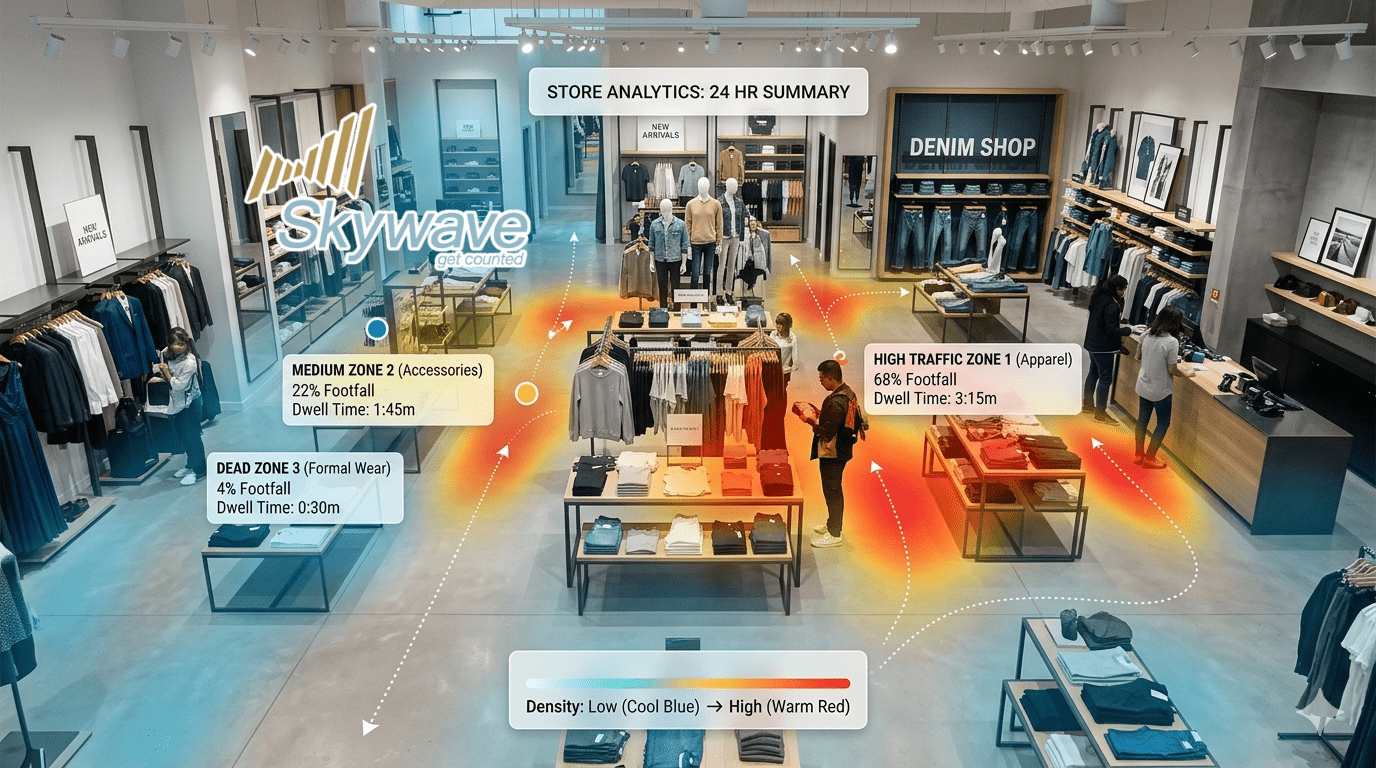
Retail teams spend significant time optimizing store layouts, merchandising displays, and staffing. But even in well-designed stores, there’s a hidden issue quietly impacting performance:
Dead zones.
These are areas in your store where customers rarely go, spend little time, and ultimately generate little to no revenue. And for retail operations teams, they represent one of the most overlooked sources of lost opportunity.
What Are Dead Zones?
Dead zones are sections of a store that receive low foot traffic and minimal customer engagement.
They might be:
- Corners customers rarely turn into
- Aisles with poor visibility
- Sections far from natural traffic flow
- Areas blocked by fixtures or awkward layouts
The challenge is that dead zones are often not obvious.
They don’t look broken — but they don’t perform either.
And in retail, unused space is expensive space.
How Dead Zones Form
Dead zones don’t happen by accident. They are usually the result of how a store is designed and operated.
- Poor Traffic Flow Design:
Customers tend to follow natural paths when entering a store. If the layout doesn’t guide them effectively, large sections can be bypassed entirely.
- Low-Visibility Product Placement:
Products placed outside key sightlines are less likely to attract attention, especially in high-traffic environments where shoppers make quick decisions.
- Fixture and Layout Constraints:
Bulky displays, narrow aisles, or poorly positioned shelves can unintentionally block movement and discourage exploration.
- Lack of Engagement Triggers:
Areas without promotions, signage, or standout displays fail to capture interest, leading customers to move on quickly.
- Misaligned Staffing:
If staff are concentrated in certain zones, customers may avoid unattended areas or feel less inclined to explore.
The Hidden Cost of Dead Zones
Dead zones don’t just affect layout — they directly impact revenue.
Here’s how:
- Lost selling space: You’re paying rent for areas that don’t generate sales
- Missed product exposure: Items placed in low-traffic zones remain unseen
- Lower conversion potential: Fewer interactions mean fewer purchases
- Inefficient store performance: High-performing zones carry the burden of the entire store
For multi-store retail chains, these inefficiencies scale across locations — turning small layout issues into significant revenue leakage.
Identifying Dead Zones with Data
The biggest challenge with dead zones is visibility.
You can’t fix what you can’t see.
This is where zone-level analytics and heatmaps make the difference.
With footfall analytics, retail teams can clearly identify:
- Which areas receive high vs low traffic
- Where customers spend time (dwell zones)
- Which paths shoppers typically follow
- Where engagement drops off
Instead of relying on assumptions, teams gain a visual map of actual customer behavior.
This allows operations teams to move from:
“We think this area isn’t performing…”
to
“We know exactly where and why it’s underperforming.”
Fixing Dead Zones with Layout and Staffing
Once identified, dead zones can be improved with targeted actions.
- Reposition Key Products:
Move high-demand or promotional items into low-traffic areas to draw customers in.
- Adjust Store Layout:
Rework pathways to guide customer flow more evenly across the store. Even small changes can significantly shift movement patterns.
- Introduce Visual Anchors:
Use signage, lighting, or standout displays to create points of interest that attract attention.
- Optimize Staffing Placement:
Position staff strategically in underperforming zones to encourage engagement and support customer movement.
- Test and Measure Changes:
The most effective retailers don’t guess — they test.
With analytics tools, teams can measure whether layout changes actually increase traffic and dwell time in targeted zones.
Turning Dead Space into Revenue Opportunities
Dead zones are not permanent problems — they are untapped opportunities.
Retailers who actively monitor and optimize store zones can:
- Improve overall store performance
- Increase product visibility
- Enhance customer experience
- Drive higher conversion rates
What was once wasted space can become a high-impact sales area with the right data and strategy.
Final Thoughts
Retail success isn’t just about how many customers enter your store — it’s about where they go once they’re inside.
Dead zones represent hidden inefficiencies that many retailers overlook. But with the right insights, they can be identified, understood, and transformed.
Curious where your store’s dead zones are—and how much they’re costing you?
Request a demo to see how footfall analytics and zone-level insights can help you uncover hidden revenue opportunities and optimize your store performance.