

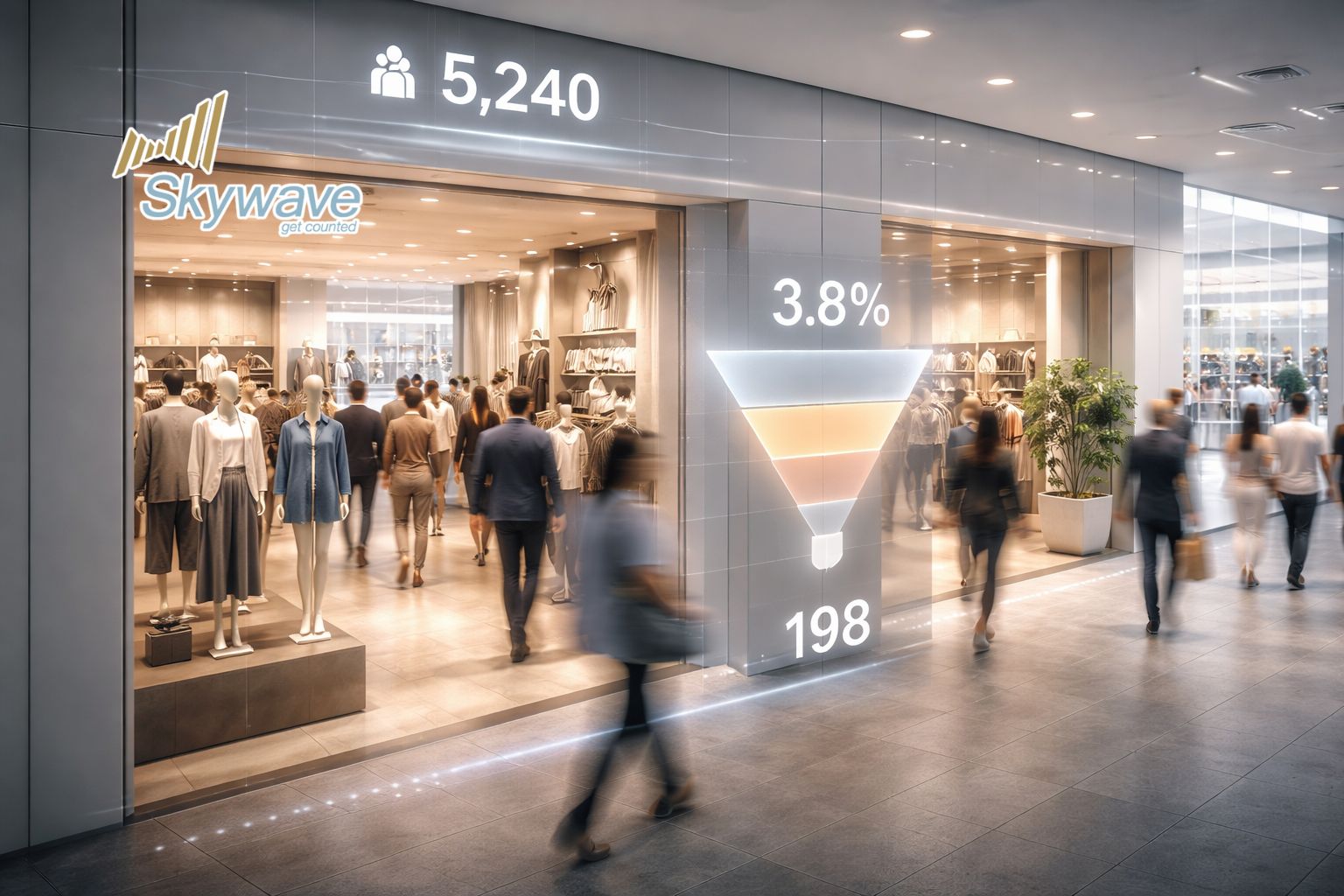
Retail teams often celebrate high traffic days. More people through the door should mean more sales — right?
Not always.
Many stores with strong footfall still underperform, while others with lower traffic quietly deliver better results. The difference isn’t luck or location. It’s conversion — and understanding the gap between traffic and sales is where better retail decisions begin.
High Traffic Does Not Equal High Sales
Footfall tells you how many people entered your store.
Sales tell you how many transactions happened.
What sits between those two numbers is what truly matters.
A store with 5,000 visitors and $50,000 in sales may look successful on paper. But another store with 2,500 visitors and $45,000 in sales is actually performing far better when you look at conversion.
Without footfall data, retail teams often:
- Overestimate store performance
- Blame staff or merchandising without evidence
- Miss underperforming locations hidden by high traffic
Traffic shows opportunity. Conversion shows execution.
Conversion Math, Explained Simply
Conversion rate is one of the clearest performance metrics in retail:
Conversion Rate = Number of Transactions ÷ Number of Visitors
For example:
- Store A: 4,000 visitors → 160 transactions = 4% conversion
- Store B: 2,000 visitors → 140 transactions = 7% conversion
Even with half the traffic, Store B is doing a better job turning visitors into customers.
This metric allows retail ops and brand teams to:
- Compare stores fairly
- Identify training or layout issues
- Separate demand problems from execution problems
Sales alone can’t tell you this story.
Comparing Stores the Right Way
When conversion data is layered with footfall, patterns become clear.
High traffic, low conversion may indicate:
- Poor store layout or “dead zones”
- Long queues or slow checkout
- Product mismatch for that location
- Inadequate staff coverage during peak hours
Lower traffic, high conversion often signals:
- Strong merchandising
- Effective staff engagement
- Clear customer intent
- Better store flow
Instead of asking “Why are sales down?”, teams can ask better questions:
- Are we attracting the right traffic?
- Are we losing customers after they enter?
- Which stores need traffic, and which need operational fixes?
Why Retail Ops Teams Need Both Metrics
For operations and brand leaders, footfall and conversion together unlock smarter decisions:
- Staffing aligned to actual visitor patterns
- Store layouts adjusted based on real movement data
- Marketing evaluated on traffic uplift and conversion impact
- Performance benchmarks that are fair across locations
Most importantly, it removes guesswork.
When conversion drops, teams know where to investigate. When traffic rises but sales don’t, the problem becomes visible immediately.
Turning Insight into Action
Modern footfall analytics platforms make this data available daily — by store, by hour, and by location. Retail teams no longer need to rely on assumptions or end-of-month sales reports to understand performance.
The retailers who win are not the ones with the most traffic, but the ones who convert traffic best.
Start tracking conversion — not just transactions.
Because understanding the gap between footfall and sales is the first step to closing it.
Talk to Skywave to start tracking conversion. Contact – Skywave